What Genuinely Useful Coaching Support for Youth Workers Looks Like
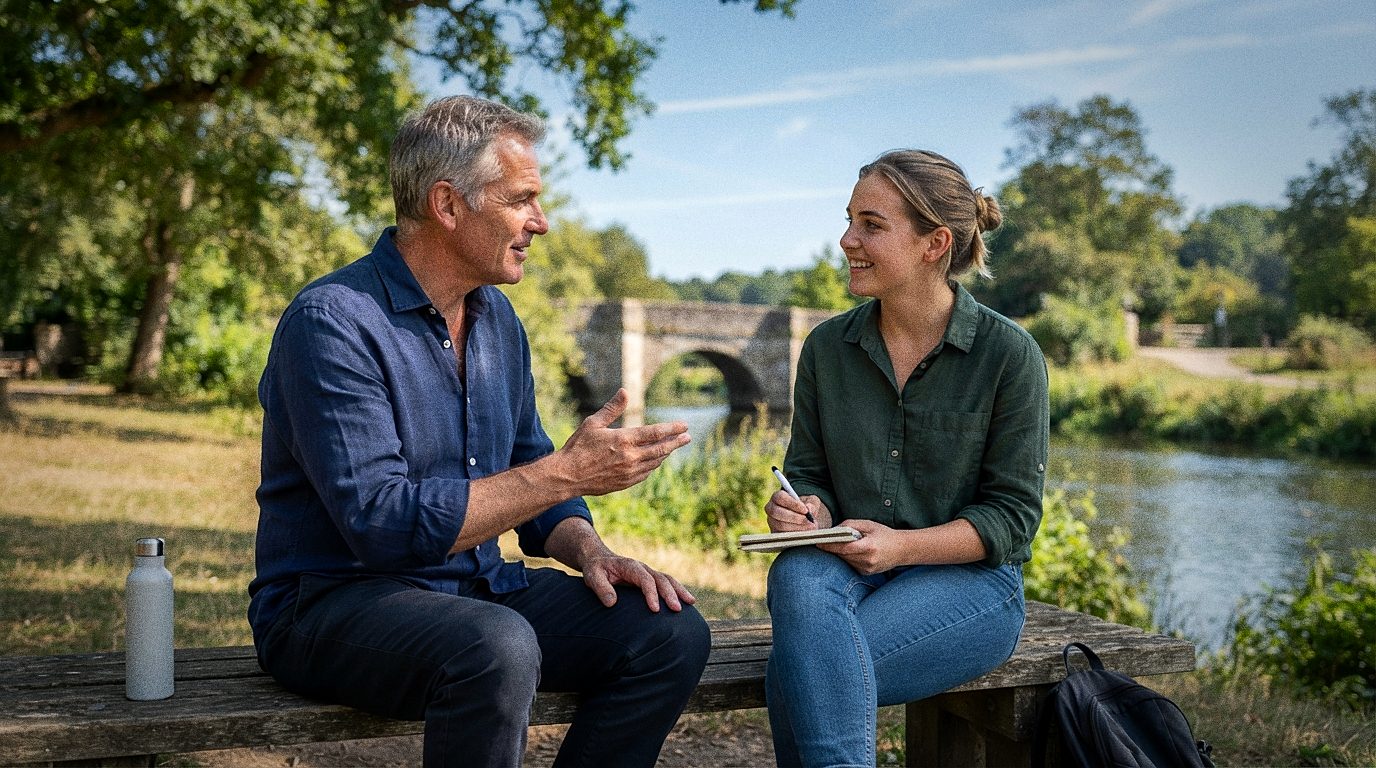
A lot of what gets labelled "coaching support" for volunteer youth workers is, in practice, an occasional friendly check-in — a coffee, a catch-up, a general "how's it going". That's genuinely useful in its own right, but it isn't the same thing as coaching that actually changes how someone leads a group, and conflating the two leaves many volunteers under-supported without anyone quite noticing.
What real coaching actually does differently
Coaching, properly understood, is structured around a specific person's actual situation rather than general encouragement. It asks better questions than "how's it going" — questions that get a volunteer to genuinely reflect on a specific session, a specific relationship with a difficult young person, or a specific gap in their own confidence, rather than offering a generic pep talk.
- Regular, not occasional — a proper coaching rhythm happens on a predictable schedule, not whenever someone happens to remember
- Specific, not general — built around real situations the volunteer has actually faced, not hypothetical scenarios
- Led by someone with real experience — a coach who has genuinely led youth work themselves asks sharper, more useful questions than one who hasn't
- Confidential enough to be honest — a volunteer needs to be able to admit a session went badly without it becoming a performance review
Why confidentiality changes what gets said
Volunteers who worry that admitting a difficult week will be reported straight back to church leadership tend to give an upbeat, edited version of how things are going — which defeats the whole purpose of coaching. Building genuine trust that a coaching conversation is a safe space to be honest, separate from any formal line-management relationship, is what actually makes the difference between a useful conversation and a polite one.
Worth knowing: the volunteers who benefit most from coaching are often not the ones struggling visibly — they're the quietly competent ones who never ask for help and are, as a result, most at risk of burning out unnoticed.
What a coaching relationship typically involves
| Element | What it looks like in practice |
|---|---|
| Frequency | Regular — often monthly or termly, on a fixed schedule |
| Format | One-to-one conversation, in person or by video call |
| Focus | Real, specific situations from recent sessions, not general theory |
| Outcome | A small number of concrete next steps, not just a good conversation |
Building this into a small church's resources
Not every church has someone with the time or experience to coach a volunteer youth leader properly, and that's a genuine and common gap rather than a failure of the church itself. Access to external coaching support — someone outside the church's own staff team, with real youth work experience — often fills that gap for smaller congregations without needing to build the capacity internally.
Coaching sits alongside, rather than replaces, the initial training a new volunteer receives — our page on a practical framework for training volunteer youth leaders covers the earlier stage, and our piece on why small churches struggle with youth work touches on how isolation, without either training or coaching, is often the real root cause of a volunteer quietly stepping back.
Signs a volunteer needs coaching support now, not later
A volunteer who starts arriving late, disengaging from planning conversations, or speaking about sessions in noticeably flatter terms than a few months earlier is often showing early signs of struggle long before they'd say so directly. Regular coaching, rather than waiting for a volunteer to ask for help, catches this pattern considerably earlier than an open-door policy that relies on them raising it themselves.
Worth knowing: a simple scaled question — "on a scale of one to ten, how sustainable does this feel right now" — asked consistently at every coaching session, surfaces a gradual decline far more reliably than relying on a volunteer to say outright that they're struggling.
Finding a coach when the church has no one internally
Plenty of small churches recognise the value of coaching support but have no one on staff or in the congregation with the right experience to provide it well. This is a genuinely common gap, and it's worth solving deliberately rather than either skipping coaching altogether or asking someone without the right background to attempt it anyway.
Where to look
- Wider denominational or diocesan youth networks — many have designated youth advisers who can offer at least occasional coaching support to smaller congregations
- Specialist youth ministry organisations — some offer coaching or mentoring programmes specifically designed for volunteer leaders in smaller churches
- A cohort or peer programme — a structured programme run across several churches often builds in coaching access as part of the package, rather than leaving each church to find it separately
- A retired or semi-retired youth worker — someone with genuine professional experience who's stepped back from full-time work but is often willing to give a few hours a month to coach a newer leader
| Source | Typical cost |
|---|---|
| Denominational youth adviser | Often free or low-cost as part of existing membership |
| Specialist organisation programme | Varies; sometimes grant-fundable |
| Cohort/peer programme | Usually bundled into the programme's overall cost |
| Independent experienced coach | Varies considerably; worth asking about a reduced rate for a small charity |
Worth knowing: it's worth being honest with a prospective coach about the church's budget from the first conversation rather than assuming a cost is fixed — many experienced youth workers offer a reduced rate, or occasionally volunteer their time outright, for a small congregation genuinely trying to do this well rather than approaching it as a commercial engagement.
Whichever route a church takes to find coaching support, the same principle applies as with volunteer training itself: a small amount of genuinely good, regular support does more for a volunteer's confidence and longevity than a larger amount of occasional, generic encouragement ever will.
Investing in finding the right coaching arrangement, even if it takes a term or two to settle, tends to pay for itself many times over in how long a volunteer stays and how well they lead once they're genuinely supported rather than simply left to manage alone.